Possible reasons, without rushed diagnosis
Exploration and preference
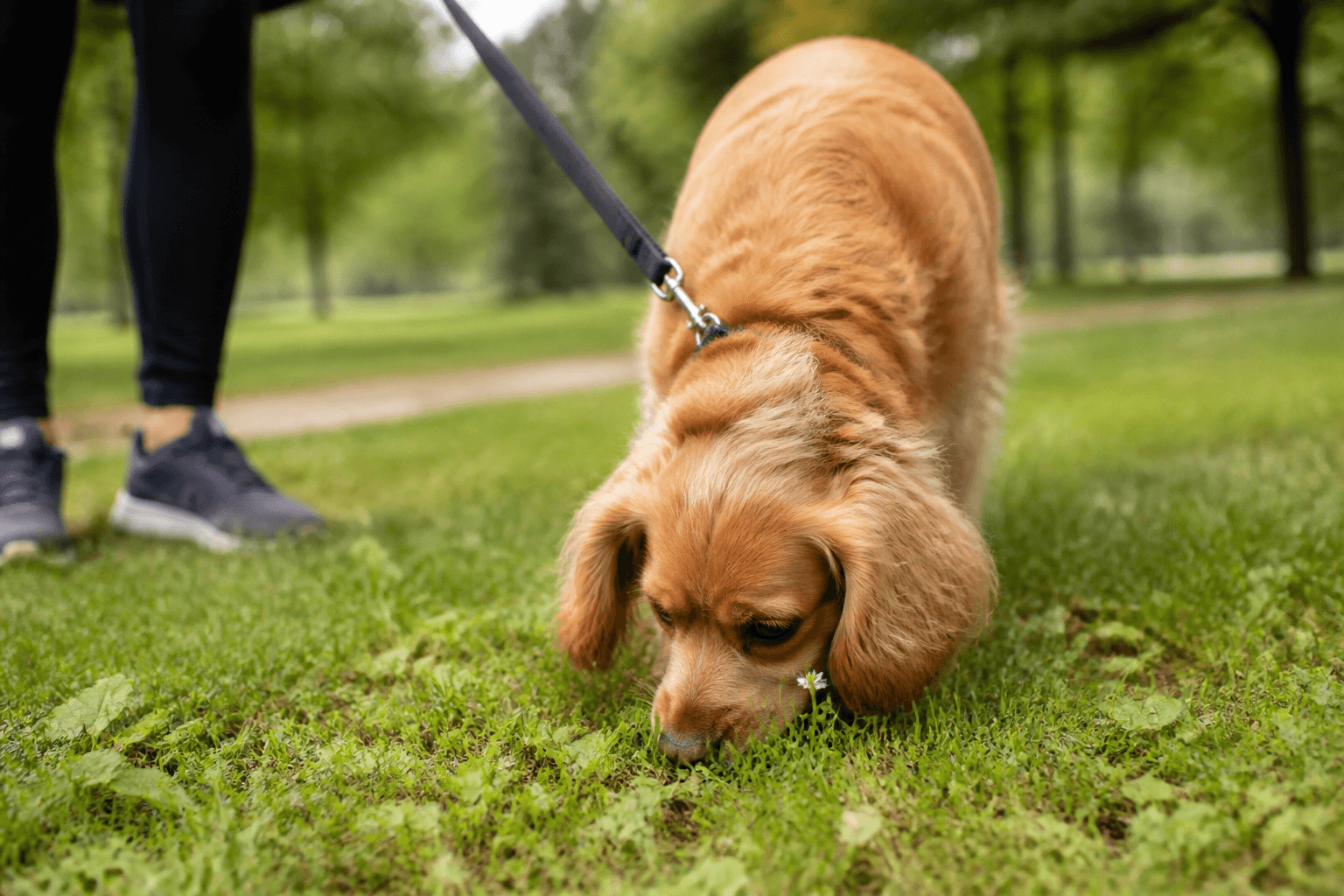
Grass sways, holds smells and has a different texture. Curious puppies and dogs may chew on leaves as they investigate twigs. Some select specific shoots and show no urgency. When ingestion is small, occasional and without symptoms, the explanation may be simple.
Learned behavior
The dog quickly realizes the effect of its actions. Pulling into the construction site may result in a break; chewing can make the owner run with a cookie to exchange. If reinforcement occurs consistently, the frequency increases. The solution is not to punish, but to reorganize the route and teach alternatives.
Boredom or need to sniff
A tour focused solely on distance and speed does not always meet the need to explore. The dog may use grass as the only permitted sensory activity. Providing safe stretches of sniffing, path variation, and simple exercises can reduce persistent searching, although it will not eliminate physical causes.
Nausea or gastrointestinal discomfort
Some dogs eat grass close to vomiting episodes, but not every dog that eats it vomits, and not all vomiting means the grass was “medicine.” Nausea can produce salivation, licking of the lips, repeated swallowing, restlessness, refusal to eat and different posture. When these signs appear, veterinary evaluation is more important than just preventing access to the plant.
Hunger, eating routine or diet
The behavior may coincide with a long interval between meals, but food should not be automatically increased. Excess calories promote weight gain. Inadequate diet or illness that alters appetite requires professional analysis. Do not conclude fiber deficiency and do not offer supplements without guidance.