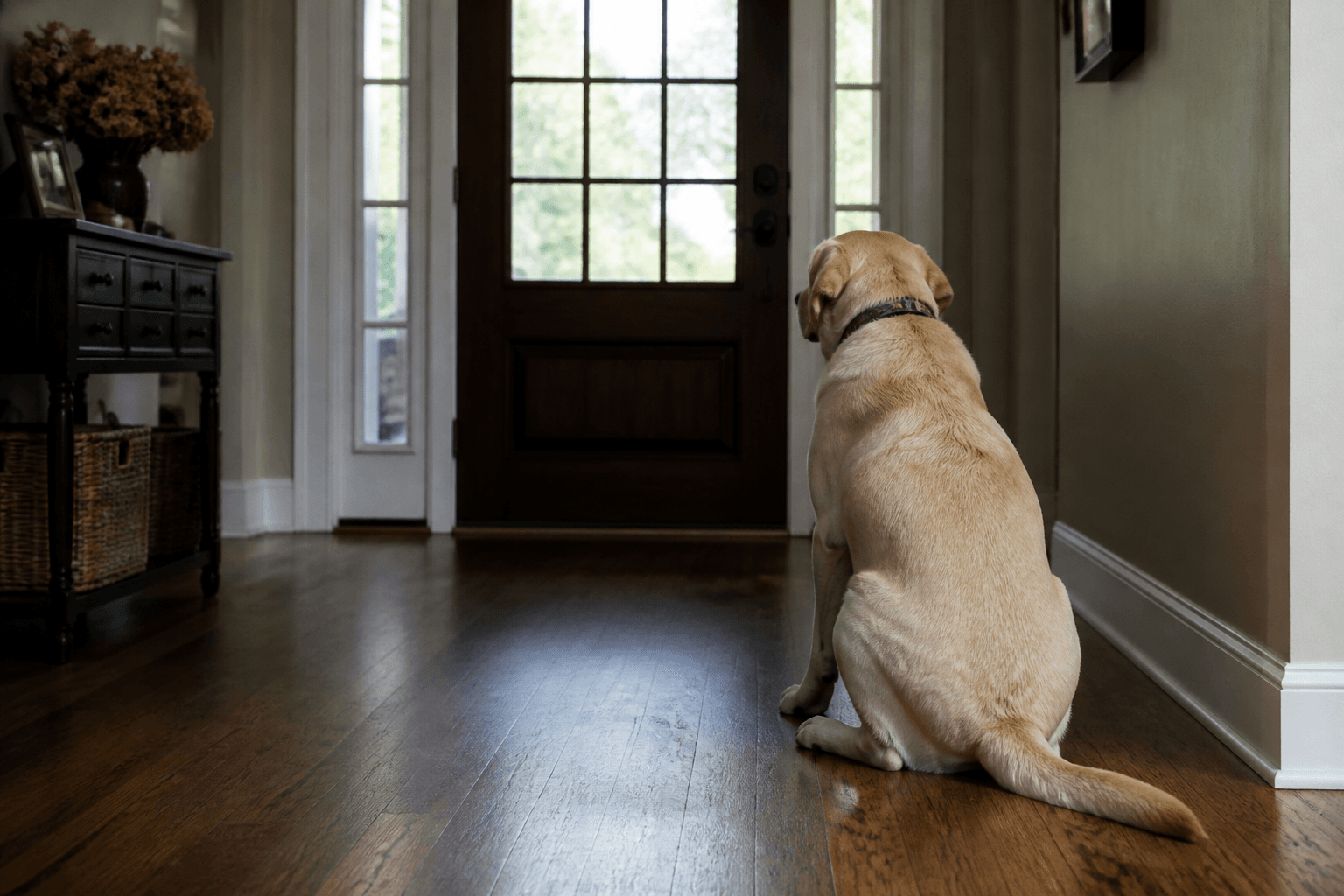
Absence training in tolerable steps
Training starts where the dog can still look good. For some, this is closing an interior door for five seconds; for others, just touching the doorknob. The actual duration comes from the recording, not from the tutor's expectations.
Separate the signs of absence
Grab your bag and sit down to read. Put on your coat and go to the kitchen. Open and close the door without leaving, if this does not provoke a reaction. Short, distributed repetitions make these signals less reliable as an announcement of long separation.
If each trial leaves the dog panting, stop. Desensitization is not flooding. The stimulus needs to be weak enough to allow recovery.
Practice micro-absences
Leave for a second and come back while the dog is calm. Then vary two, one, three, two seconds. Avoid a predictable ascending ladder that always ends in failure. Increase slowly and include easy reps.
Returning before barking prevents rehearsal of the behavior and fear. If the dog barks, don't sit outside waiting for long minutes for silence while he despairs. Return neutrally, review the recording and greatly reduce the next step. When there is just an isolated bark without signs of panic, a short pause may allow calm entry, but well-being comes before a strict rule.
Change one variable at a time
Internal door, external door, schedule, clothing, hallway noise and duration are different difficulties. A dog can tolerate ten minutes in the afternoon and react in seconds at night. Train in real context gradually.
Plan for unavoidable absences
If the dog only tolerates minutes and needs to be left alone for hours, training is exceeded daily. When possible, organize a family member, caregiver, carefully evaluated daycare or temporary routine adjustment. The alternative must be safe and not cause new stress. This is not “giving in”; is to prevent repetition of panic as learning progresses.