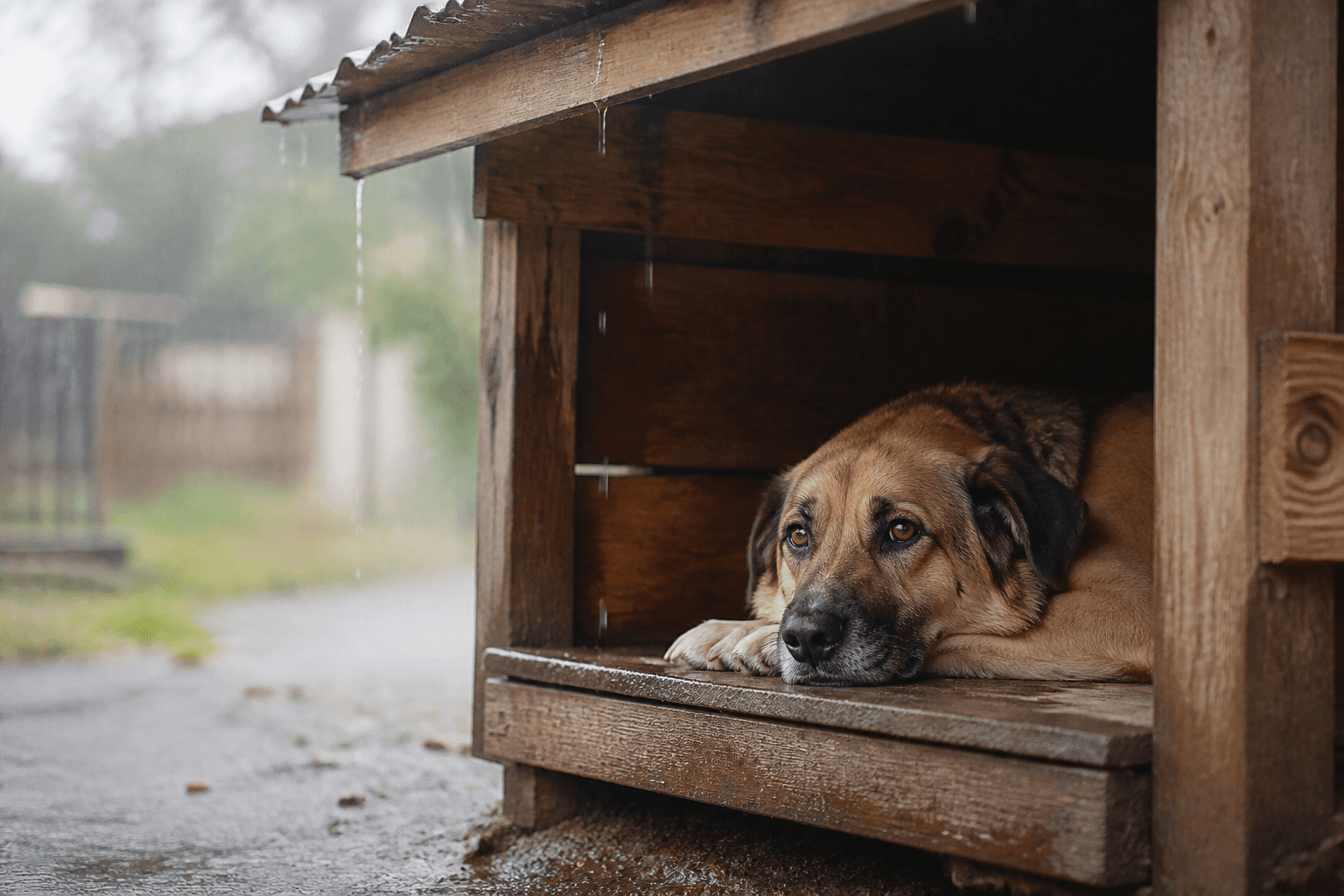
Cão descansando em refúgio coberto durante uma chuva leve

Image credit: Acervo pessoal: DogWise

Behavior9 min readPublished on August 17, 2026

Dog afraid of rain: desensitization without making the fear worse

The fear of rain is rarely limited to the sound of thunder. The dog can react to the wind, changes in light, drops on the roof, vibrations in the windows and even changes in the house's routine. Therefore, simply playing loud thunderstorm audio is not desensitization: it may be too intense an exposure and strengthen the association of danger.

The safest route is to work below the point where the dog loses the ability to eat, explore or rest. The intensity must be so small that he perceives the stimulus without suffering. From there, sound, ambience and predictability are adjusted in short steps. The objective is not to force you to “face it”, but to gradually increase your sense of security and your possibility of choice.
First, find out what rain he is afraid of

Observe whether the reaction starts before the first drops or just with thunder. Some dogs become restless when the sky gets dark; others tolerate light rain but hide when there is wind or blows on the roof. There are also those who are scared by objects banging in the yard, car alarms or people hastily closing doors.

Keep a simple record: time, weather conditions, first sign noticed, place chosen by the dog and how long it took to recover. Also note whether they accepted food and responded to a known activity. This journal helps you sort out triggers and avoid boosting your workout audio when the main issue might be vibration, glare, or unpredictability.

The first signs may be discreet: ears back, rapid breathing, insistent search for the owner, yawning out of context, difficulty lying down or refusing a snack. Tremors, escape attempts and destruction of doors indicate a higher degree of suffering. In these situations, physical safety and professional guidance take priority over any home exercise.

Desensitization is not “letting it get used to”

Desensitization means presenting a very mild version of the trigger, at a tolerable intensity, and only moving forward when the dog remains comfortable. Leaving him stuck in front of a scary sound until he stops reacting is another thing. The apparent immobility may be exhaustion or blockage, not safety learning.

Combine light exposure with something enjoyable, such as a high-value food, quiet play, or sniffing activity. This association must happen while the dog is still able to participate voluntarily. The American Kennel Club training guidelines section brings together general references on training and management; Tailor any suggestions to your dog's temperament and history.

Useful sessions tend to end early. If he heard a few seconds of light rain, grabbed the snacks and relaxed again, there has already been a productive repetition. It is not necessary to test the limit in every workout. Stopping while everything is fine preserves confidence for the next session.

Set up an intensity scale

Start with a short, predictable recording, played at a barely perceptible volume. Use a device that allows fine control and stay away from speakers with strong bass. While the sound plays, offer an activity that the dog already enjoys. Then, turn off and close.

Advance one variable at a time. One day, increase the volume just a little; in another, add a few seconds. Later, try the sound in another room or with a curtain moving slightly. Changing volume, duration and environment at the same time makes it difficult to know what caused discomfort.

If the dog stops eating, watches the speaker, tries to leave or takes a while to recover, go back to the previous step. A regression does not mean failure. She informs that the difference between the stages was too great or that that day there were other factors, such as tiredness, roadworks or real rain approaching.

Audio does not play the entire storm

Recordings are useful for working on part of the sound component, but they do not imitate atmospheric pressure, odors, static electricity, flashes and real vibrations. A dog calm with audio may still feel fearful during a storm. Treat the recorded workout as a piece of the plan, not a final test.

On light rain days, use management rather than “testing”. Close curtains, reduce outside noise, prepare the refuge and offer a family activity before the reaction escalates. If he is calm, real light rain can make for safe experiences. If he's already tense, don't take advantage of the moment to demand commands or prevent him from hiding.

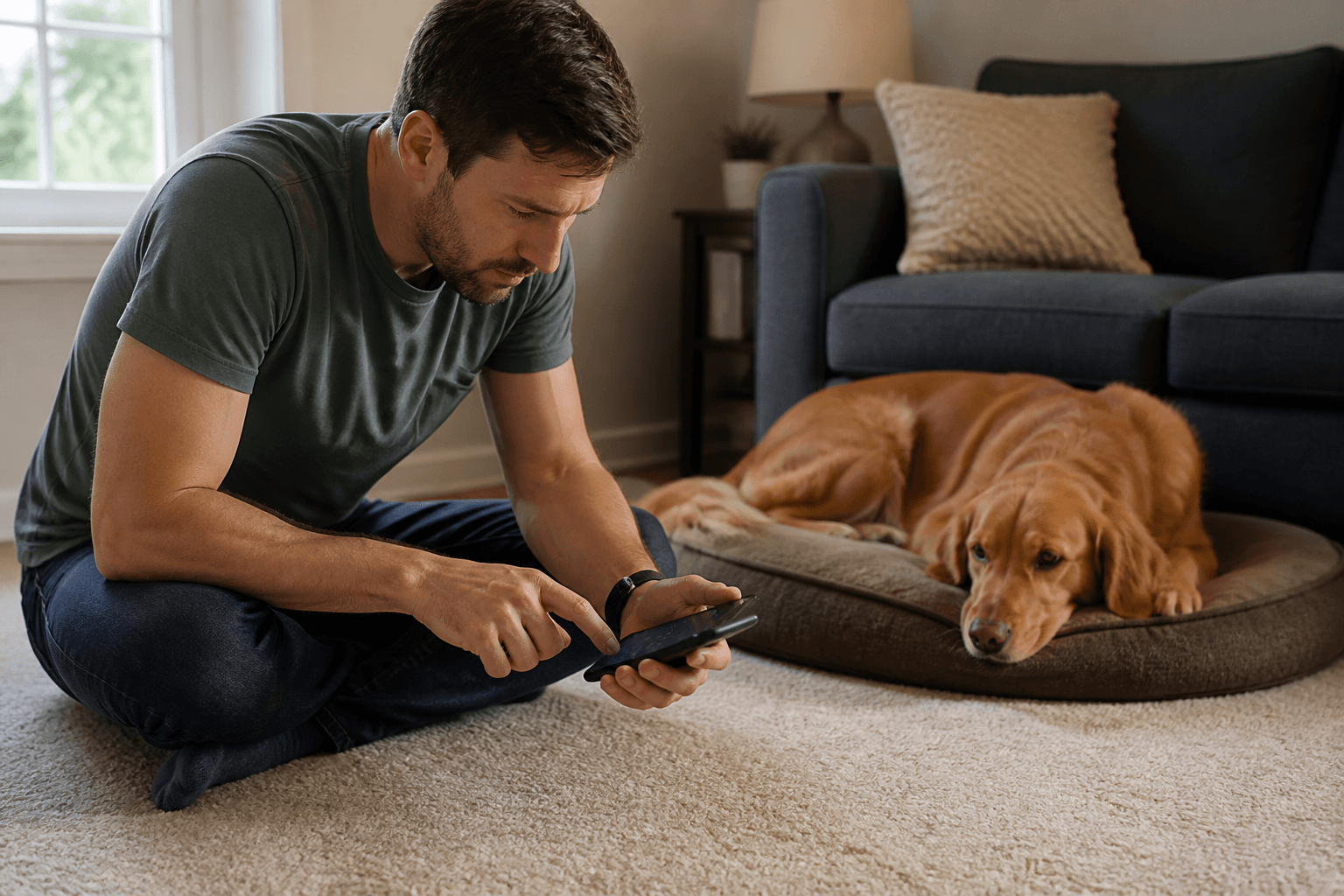
Tutor ajustando áudio de chuva em volume baixo durante treino com o cão
Image credit: Acervo pessoal: DogWise

Create a refuge that remains a choice

The best location might be an indoor bathroom, a hallway, the area under a table, or a carrier previously associated with resting. Leave non-slip flooring, water and a bed available. Muffle sounds with curtains, doors and constant noise at a comfortable volume. Check ventilation and temperature.

Do not lock your dog in the shelter if he is not used to it. The ability to enter and exit reduces the feeling of imprisonment. Nor do you forcibly remove it from hiding to show that “there is nothing”. Staying close, speaking normally or offering contact when he seeks does not “reward fear”; the important thing is to respect when he prefers distance.

If the dog also suffers when left alone, the pattern may involve more than one problem. The article about [dog that barks when its owner leaves](/pt/cao-lates-so-when-I leave-of-home) helps to observe signs linked to absence, without automatically confusing them with fear of storms.

What to do when the rain has started

During a crisis, suspend training progression. Reduce access to gates, windows and escape areas; check identification and keep external doors controlled. Invite the dog to the protected place, but allow him to choose where to stay within a safe area.

Offer chewing or licking only if he accepts without pressure. Refusing food is information about emotional intensity, not stubbornness. Maintain predictable movements and avoid reprimanding vocalizations, restless pacing or looking for laps. After rain, give yourself time to rest before resuming demanding activities.

Mistakes that make fear grow

  • Increase the audio because the dog “needs to learn”.
  • Take the animal to the balcony during a storm.
  • Punish attempts to hide or seek proximity.
  • Only start training during strong storms.
  • Use the transport box as sudden confinement.
  • Consider the absence of barking as a guarantee of tranquility.
  • Advance despite refusal of food and rigid body.

It is also risky to compare dogs. One can progress in days; others need smaller steps and specialized support. The appropriate speed is defined by the animal's own response.

A four-phase home protocol

In the first phase, prepare the environment without causing rain. Teach your dog to look for a rug, sniff out treats and rest in the shelter on quiet days. In the second, introduce a few seconds of very low audio. In the third, vary duration or volume, never both together. On Wednesday, use the management learned during light rain, without turning the real event into a test.

Log the recovery. A dog that returns to exploring immediately after the sound probably coped better than one that eats during the session, but remains hypervigilant for a long time. Evaluate the entire experience, not just the moment you received the snack.

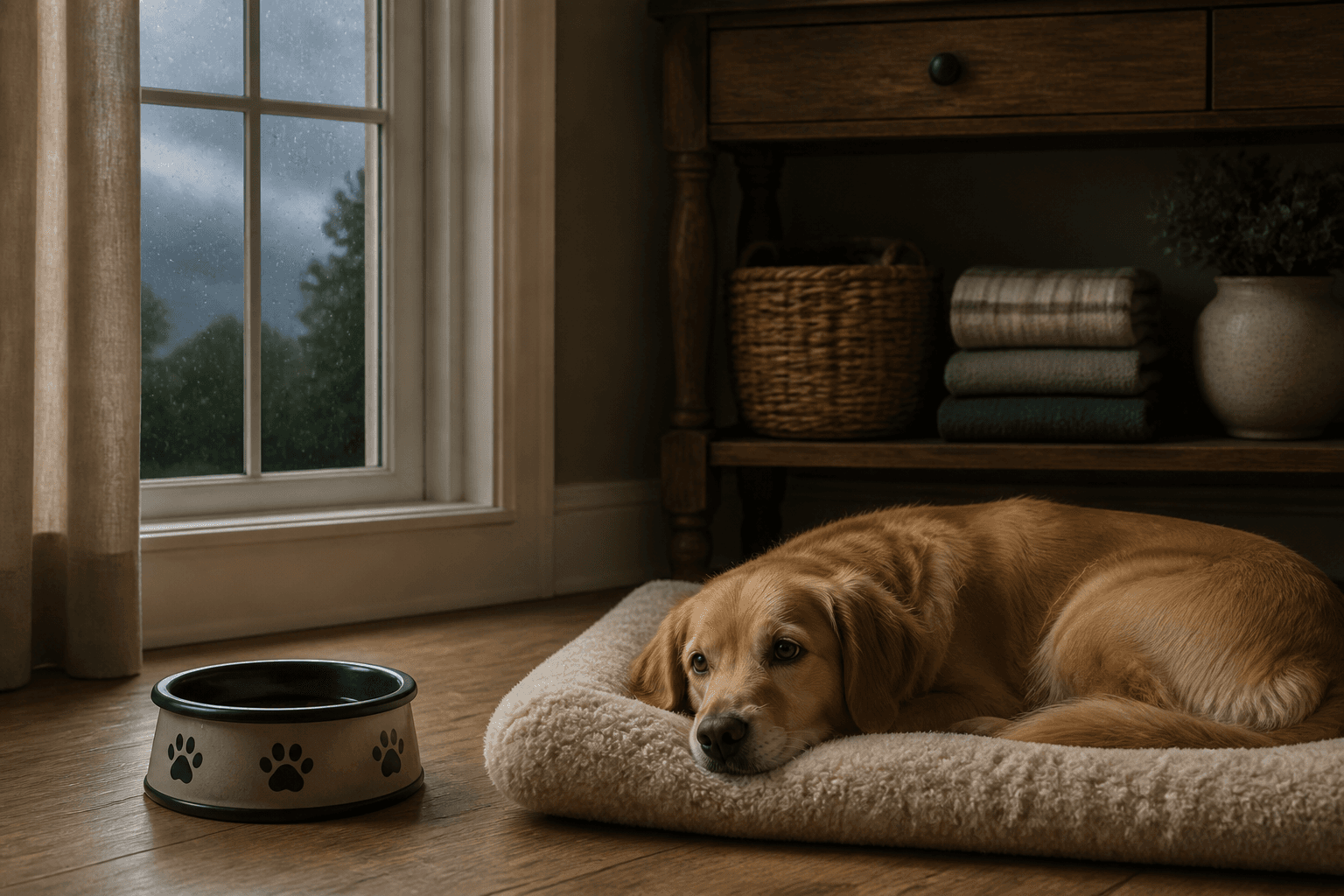
Pote com petiscos e tapete confortável preparados antes de uma tempestade
Image credit: Acervo pessoal: DogWise

Monitoring notebook

Write down the first body signal observed and the stimulus that happened immediately before. Describing “he got up, looked at the window and stopped chewing” is more useful than just writing “he was scared”. With details, you can notice small changes and choose a compatible step.

Record the audio intensity, duration and distance from the speaker. Add what the dog chose to do and how long it took him to relax. This data prevents accidental jumps and allows you to repeat a configuration that worked.

Compare calm days and days with real wind. If the same recording produces different responses, context is playing a role. Sleep, movement on the street and weather signs can change tolerance; therefore, the plan needs to be flexible.

Define the criteria for termination in advance: refusal of food, attempt to leave, rigid body or persistent vigilance. Closing early does not reward escape. It is a training decision that prevents repeated practice from panicking.

Include silent sessions where refuge remains associated with rest and good things. This way, the place doesn't become a warning that something scary is about to happen. The safety routine also needs to exist on clear days.

Review only the recorded facts weekly. Look for faster recovery, looser posture, and the ability to choose activities. Don't rely on a general impression, as a single intense storm can mask progress made in mild situations.

When to seek help

Seek a veterinarian when the fear appears suddenly, worsens significantly, causes injuries, attempts to escape, prolonged loss of appetite or prevents rest. Pain and other conditions can alter sensitivity. A veterinary behaviorist or behavior professional who works without coercion can develop an individual plan.

In intense conditions, the veterinarian can discuss appropriate clinical resources. Do not offer sedatives, human medications, or “natural” products on your own. The objective is to reduce suffering and allow learning, with assessment of risks and the dog's general condition.

Frequently asked questions

Can I cuddle during the storm?

Yes, if the dog seeks contact and relaxes with him. The emotion of fear is not a trick prized for affection. Avoid just holding him against his will or preventing him from choosing another place.

Should I leave the audio playing for hours?

No. Continuous exposure makes it difficult to control intensity and observe recovery. Prefer short, planned sessions that end before discomfort appears.

How long does desensitization take?

There is no universal deadline. History, intensity of triggers and consistency of management change the rhythm. The parameter is the dog's response, not a fixed schedule.

Does a calming vest help?

Some resources may help certain dogs, but they are no substitute for a safe environment and a gradual plan. Introduce any accessory on a quiet day and stop if it causes discomfort.

What if he doesn't accept snacks?

Reduce or remove the stimulus. Try a quiet activity in an easier condition. If the refusal occurs even with slight signs or during heavy rain, seek professional evaluation.

Conclusion

Desensitizing a dog afraid of rain means building small, predictable and tolerable experiences. Identify the components of fear, prepare a voluntary refuge, change one variable at a time, and retreat at the first sign of overload. During real storms, prioritize protection and recovery. The most valuable progress is not supporting the greater volume, but regaining the ability to rest, choose, and feel safe.