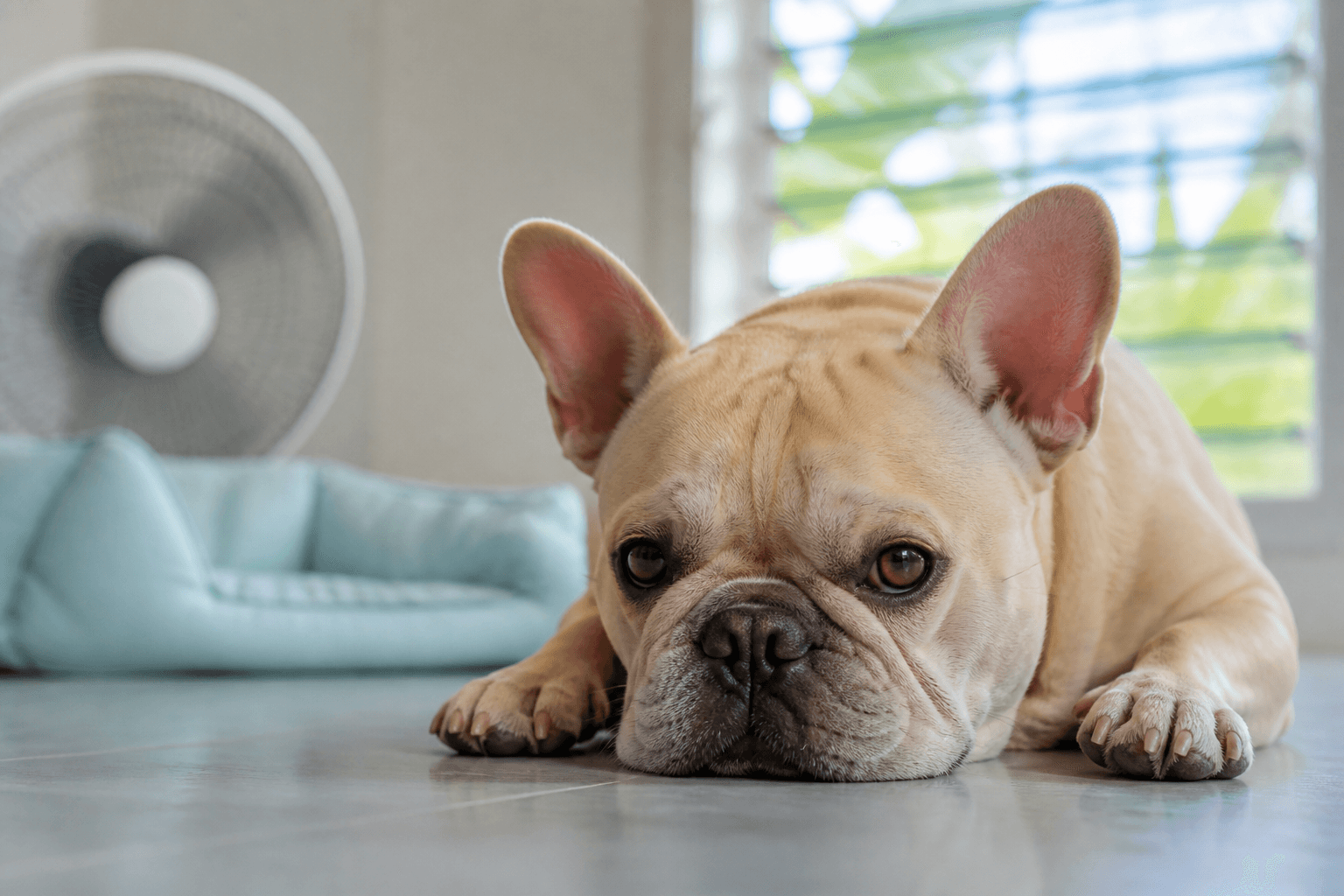
Cão braquicefálico descansando em ambiente interno fresco e ventilado

Image credit: Acervo pessoal: DogWise

Breeds8 min readPublished on August 17, 2026

Brachycephalic breeds and heat: warning signs that you cannot ignore

Brachycephalic dogs, such as pugs, French bulldogs, English bulldogs and shih-tzus, may have more difficulty moving air and dissipating heat. The risk doesn't just start when the thermometer hits an extreme number: high humidity, sun, exertion, anxiety, obesity and poor ventilation can make a seemingly common situation dangerous.

Very noisy breathing, abdominal straining, abnormally colored tongue or gums, weakness, disorientation, vomiting, staggering or collapse are signs that should not be observed “a little longer”. Remove the dog from the heat, begin careful cooling and seek urgent veterinary care. Overheating can progress quickly.

Veterinary warning: this article is educational and does not replace evaluation. Difficulty breathing and suspected heat stroke are emergencies. Contact a clinic while you're on the go and follow the staff's guidance.
Why the short snout changes the safety margin

Dogs dissipate much of their heat by panting. Air passes through airway structures and evaporation helps with thermal control. In many brachycephalic patients, narrow nostrils, elongated tissues and other anatomical changes increase resistance to air passage. Not every individual has the same severity, but the “common breed” appearance does not make respiratory effort normal.

When the dog needs to pant more to cool down, the effort itself can worsen swelling and turbulence in the airways. The margin between discomfort and emergency may be smaller. Therefore, prevention must consider the individual, and not just a generic weather forecast.

Conditioning, weight, age, heart or respiratory disease, and surgery history also matter. Ask your veterinarian for a risk assessment on your dog before summer or travel.

The alert starts before the collapse

Know your usual breathing at rest, in a cool environment. This allows you to notice when the noise is more intense, when the chest and abdomen work too much or when the dog does not catch its breath after light activity. Short videos taken safely can help the veterinarian compare episodes.

Initial signs include disproportionate panting, thick salivation, restlessness, insistent search for a cold floor, refusal to continue and delay in recovering. Serious signs include weakness, confusion, vomiting, diarrhea, change in color of the tongue or gums, lack of coordination, fainting and convulsions.

Don't wait for everyone to show up. A dog that cannot breathe comfortably needs help even without collapse. The American Kennel Club canine health provides general information, but an emergency requires direct contact with a veterinary service.

Temperature is just one part of the equation

Humidity reduces evaporation efficiency. Direct sun heats the body and floor; asphalt and concrete can remain hot. Closed environments, cars, glassed-in balconies and boxes with poor ventilation accumulate heat. Excitement and play increase internal heat production.

Therefore, a short exit may be inappropriate even without a temperature record. Note shade, air circulation, duration, access to water and ability to interrupt the route. If in doubt, choose enrichment in a cool environment.

Never leave a dog in a parked car. Half-open windows do not make the vehicle a safe place. Plan trips so that one person can stay with the animal or so that it can stay at home.

Prevention starts at the time and route

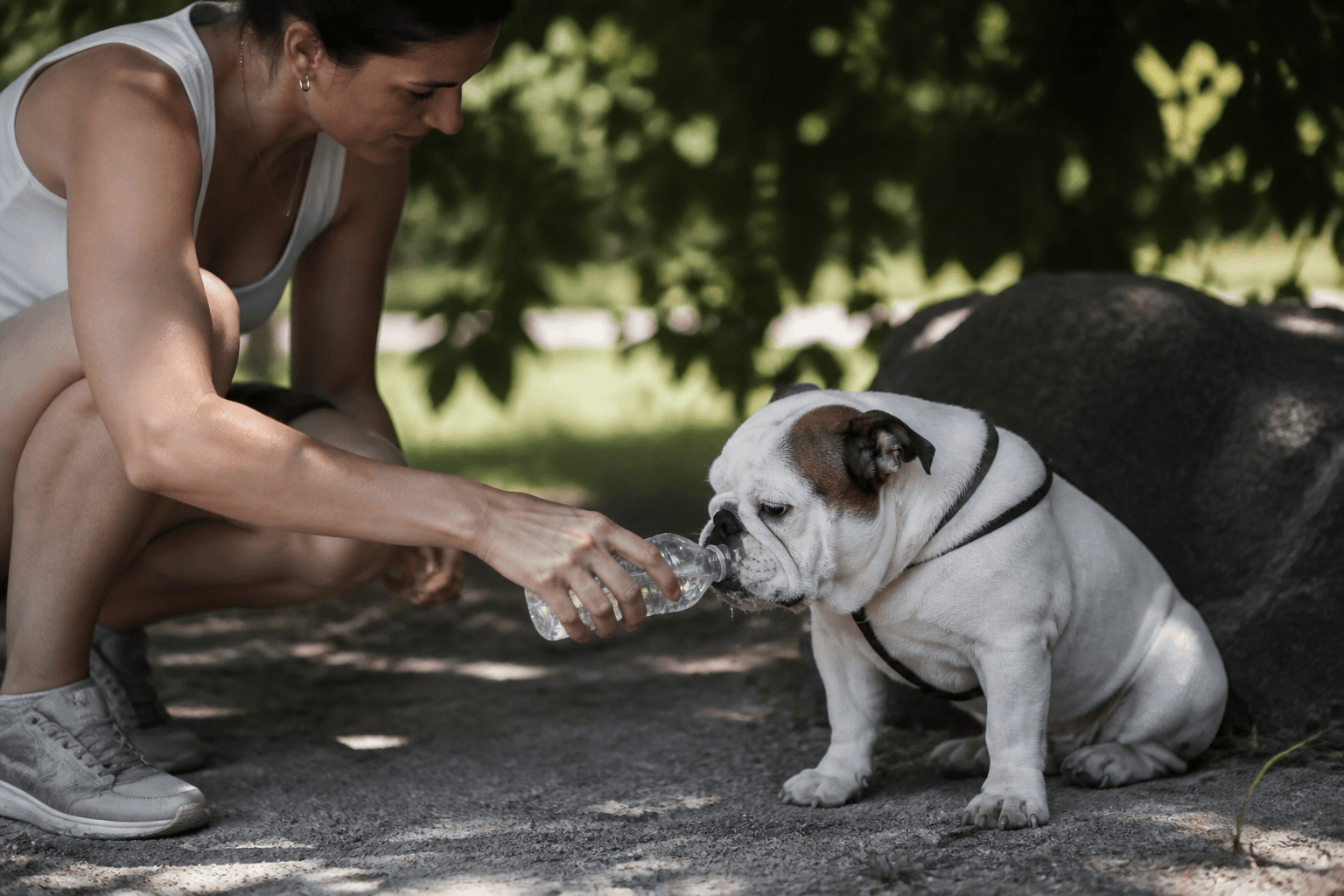
Prefer milder periods and confirm the real conditions on the street. Take short journeys, close to cool places, with the possibility of immediate return. Bring water and a container, but don't rely on it alone: ​​drinking doesn't compensate for excessive exposure.

Avoid running, cycling and intense play in the heat. Allow breaks and do not force the dog to follow a human pace. A well-fitting chest usually prevents additional pressure on the neck; the veterinarian or qualified professional can advise the appropriate model.

Indoors, provide a ventilated or air-conditioned environment, shade and clean water. Monitor for power outages if the dog relies on refrigeration. Cold mats can be helpful if used as instructed and without the risk of chewing, but they are not a substitute for environmental control.

Tutor oferecendo água a cão de focinho curto em local sombreado
Image credit: Acervo pessoal: DogWise

What to do if you suspect overheating

Immediately move the dog to shade or a cool environment and contact a clinic. Start cooling with cool, not ice-cold, water applied to the body, especially in areas with less hair, while maintaining air circulation. Transport with ventilation and follow veterinary advice.

Do not immerse your dog in ice, do not cover him with heavy wet towels for a long period of time, and do not force water into his mouth. Extreme cold can cause vasoconstriction and towels heated by the body can retain heat if not changed. An altered dog may aspirate liquid.

Even if it appears to improve, evaluation is important because internal complications may not be immediately visible. Report duration of exposure, activity, signs, measurements taken and medications in use.

Noisy breathing is not a “funny way”

Awake snoring, choking, exercise intolerance, pauses during sleep and effort to breathe deserve veterinary discussion. Normalizing these signs because they appear in many specimens delays evaluation. There are different degrees of obstructive airway syndrome in brachycephalic patients, and only individual examination guides management.

Maintain adequate body weight with a veterinary plan, as excess tissue increases respiratory and thermal load. Do not start intense exercise to lose weight without evaluating your airways and general condition.

Water helps, but thirst alone does not measure the risk

Provide water, but do not wait for intense thirst to end the activity. Some dogs continue to walk out of excitement despite being warm; others drink little during stress. Breathing, coordination and recovery are more immediate data.

Persistent changes in water consumption outside the context of heat also deserve attention. The article about elderly dog ​​that drinks too much water explains how to observe the pattern without drawing conclusions just based on the empty bowl.

Plan trips and days away from home

Confirm that accommodation and transportation have reliable refrigeration. Bring clinic contacts to the destination and do not ship the dog in a condition that compromises ventilation or temperature control. Company rules do not equate to a medical safety assessment.

At the beach, park or event, identify a quick route to an air-conditioned environment in advance. Umbrella shade can change throughout the day and sand heats up. A muzzle that prevents opening the mouth and panting is especially dangerous; any equipment must allow functional breathing and be oriented appropriately.

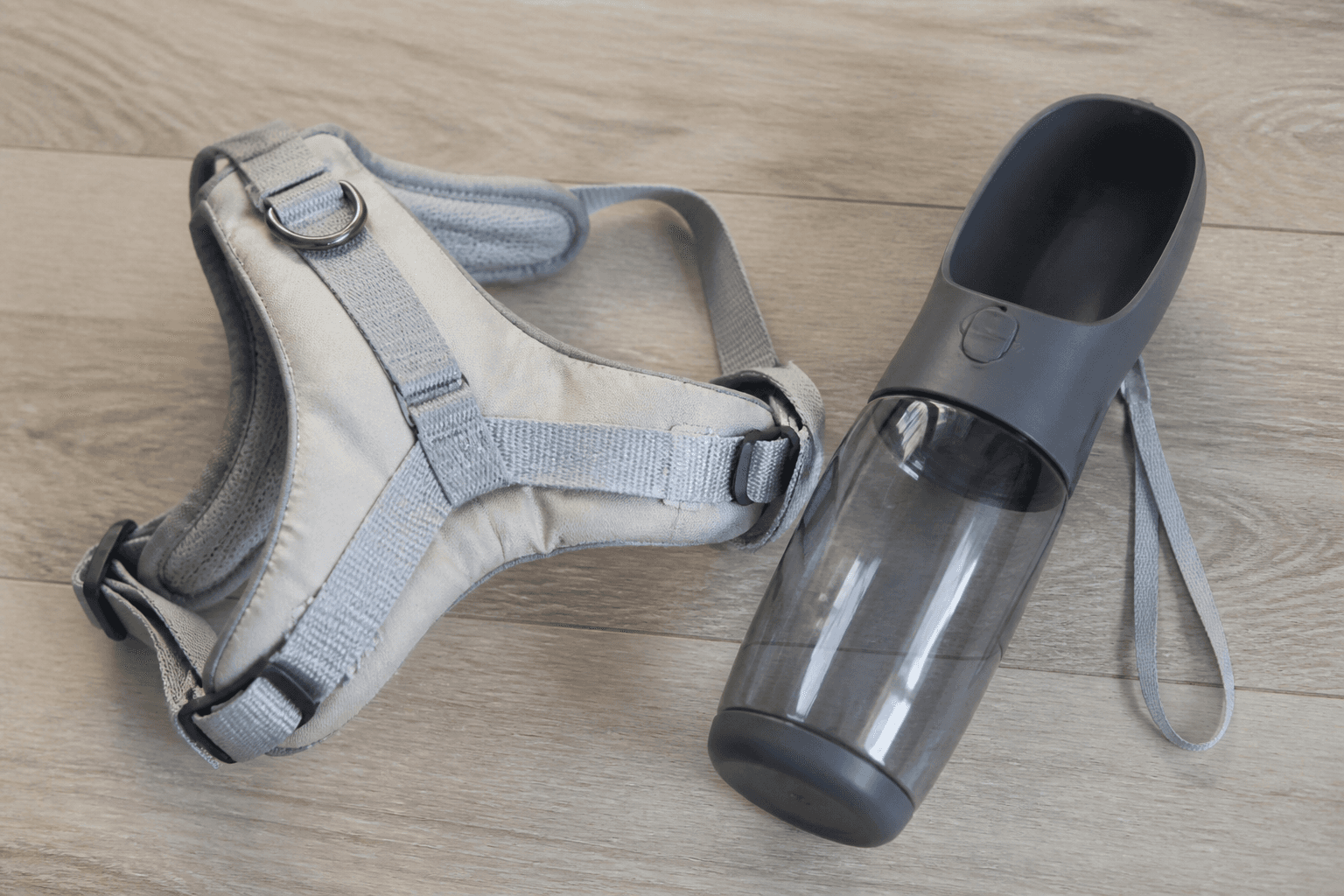
Peitoral leve e recipiente de água preparados para saída curta em dia ameno
Image credit: Acervo pessoal: DogWise

A family emergency plan

Everyone in the house must recognize respiratory effort and know which clinic serves emergencies. Leave your phone number, address and route accessible. Agree who calls, who starts cooling, and who drives. This division avoids wasting time.

Have water, a container, a chest harness and a light towel available, without putting together a “kit” that gives a false feeling that assistance will not be necessary. First care serves to gain security during travel, not to treat at home.

Monitoring notebook

Record how the dog breathes at rest on a cool day and how it recovers after authorized light activity. This creates an individual reference. Don't make an effort to test limits.

Write down the time, perceived humidity, sun exposure and duration of trips. If recovery worsens under certain conditions, reduce the plan before the next walk and take the data to the veterinarian.

Observe noises, neck position, abdominal movement and the need to sit or lie down. A brief video is only useful if filming it will not delay heat removal or service.

Control your weight with professional assessments, not just using a home scale. Body score and muscle mass help you build a plan that doesn't put a strain on breathing.

Review confinement environments: transport box, car, elevator, bedroom and balcony. Ask what would happen if ventilation stopped. Contingency plans must exist before a critical day.

Share the rules with walkers, daycare providers and family members. Specify activity limit, times, individual signs and emergency contact. Don't assume that everyone considers snoring a warning.

Also do a review before changing seasons, traveling or changing caregivers. Confirm that phones are still valid, that the transport offers air circulation and that the person responsible knows how to interrupt an activity without waiting for authorization. Report any worsening since the last evaluation to your veterinarian, including slower recovery after short walks. Anticipating these conversations is safer than discovering a limitation when the dog is already exposed to heat.

Frequently asked questions

Is the fan enough?

It depends on the conditions and the dog. Fan moves air, but may not control a very hot and humid environment. Ensure a really cool place and monitor the animal.

Can I wet the dog before the walk?

This does not make a hot outlet safe. The main prevention is to avoid exposure, reduce effort and choose an appropriate time. Ask for veterinary advice for the individual.

What temperature is dangerous?

There is no single safe number for everyone. Humidity, sun, activity, ventilation and clinical condition change risk. Use conservative planning and dog signals.

Is snoring normal in pugs and bulldogs?

Being frequent does not mean healthy. Snoring and other breathing noises should be reported to your veterinarian, especially when awake or associated with exertion.

After getting better with water, do I still need to go to the clinic?

Yes, if there is a suspicion of heatstroke or difficulty breathing. Improving externally does not exclude complications, and the team must guide the evaluation.

Conclusion

In brachycephalic breeds, heat and difficulty breathing form a combination that requires conservative prevention. Plan schedules, reduce effort, ensure a cool environment and learn how to breathe regularly. In the event of severe exertion, color change, weakness or disorientation, cool down carefully while seeking urgent care. Waiting for the collapse to act eliminates precisely the margin of safety that these dogs need most.