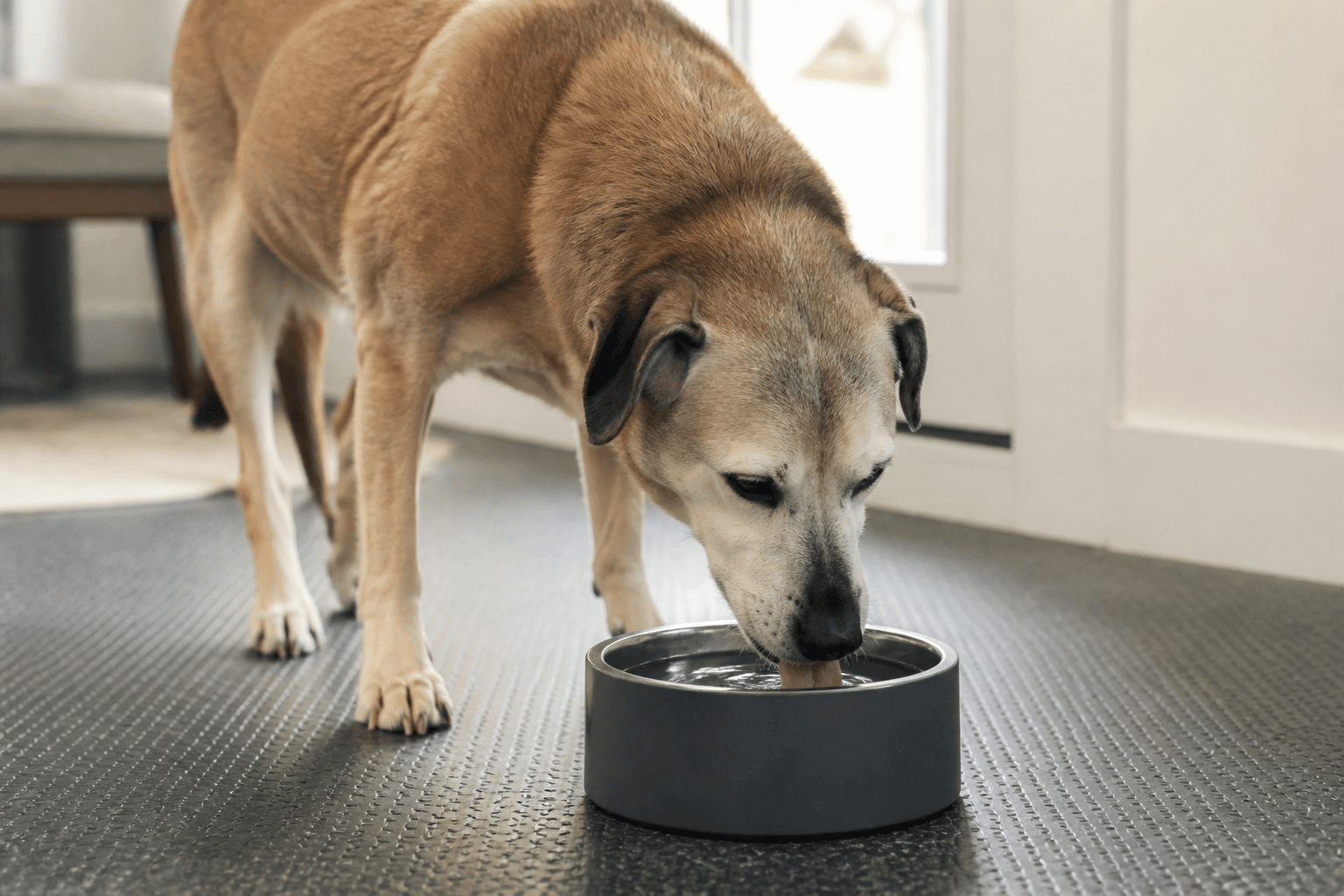
Cão idoso bebendo água em pote estável sobre piso antiderrapante

Image credit: Acervo pessoal: DogWise

Health9 min readPublished on August 17, 2026

Elderly dog ​​drinks too much water: when to worry

When an elderly dog ​​starts drinking more water, the change deserves to be confirmed and communicated to the veterinarian, especially if it persists or is accompanied by more urination, weight loss, change in appetite, vomiting, weakness or accidents at home. Drinking a lot does not confirm a diagnosis: heat, activity, drier food, medications and various illnesses can increase thirst.

The correct attitude is not to remove the pot to “control” the urine. Water restriction can cause dehydration or worsen an existing problem. Keep clean water available, observe associated signs, and produce an objective record for the consultation. This content is educational and does not replace evaluation, examinations or advice from a veterinarian.
First, confirm that there has been a real change

In homes with more than one animal, the empty bowl does not reveal who drank. Evaporation, spillage and playing with water are also deceiving. Before concluding that the elderly person is excessively thirsty, organize safe observation for a few days, without decreasing supply.

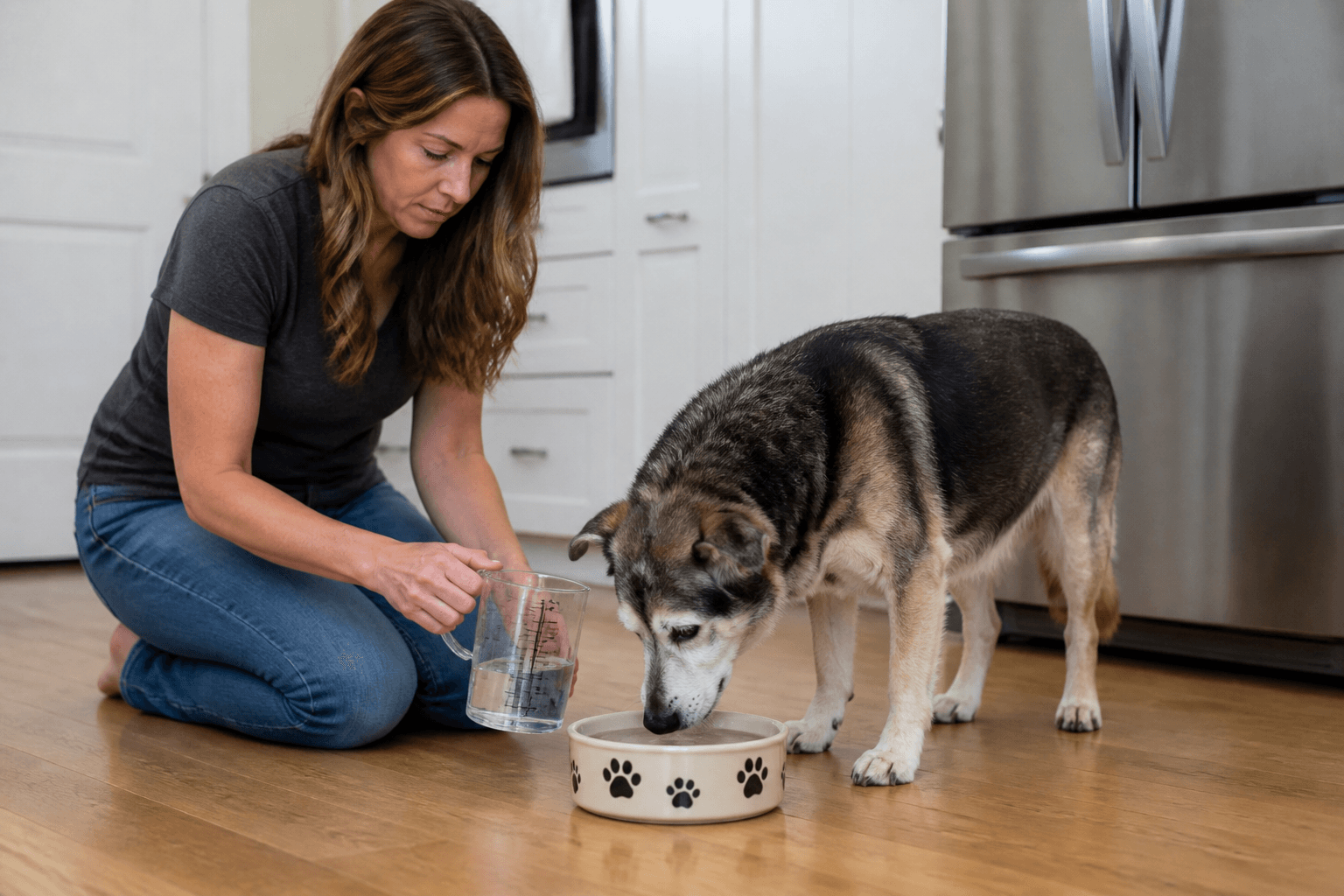
Use a graduated container or measure the amount placed. Record replacements and, at the end of a period defined with the veterinarian, measure what is left. Add water added to the feed, authorized broths, ice and other sources. If there are several dogs, offer separate pots under supervision or talk to the clinic about the best way to measure without causing disputes.

Do not use a limit found on the internet to diagnose the animal. Consumption varies with weight, diet, temperature, activity, pregnancy, lactation and clinical condition. The homemade measurement gains value when combined with history and interpreted by the professional.

The American Veterinary Medical Association's Owner Care area offers general information about pet health. In the case of increased thirst, however, an informational page does not replace the physical examination and tests selected for that dog.

Observe the water along with the urine

Thirst and urinary production often change together. A dog that drinks more may ask for more drinks, produce larger volumes, soak the toilet mat or be unable to wait the usual time. This is different from urinating often in small quantities, straining, feeling pain or showing blood, signs that also need evaluation.

Write it down without punishing. Accidents in a trained senior dog are not proof of stubbornness. He may be producing more urine, have reduced mobility, experience pain when standing up, have cognitive changes or face urinary problems. Scolding increases stress and does not treat the cause.

During walks, try to understand the approximate duration and volume, but do not delay urinating to measure. At home, record how many times you asked to go out and whether there were any leaks while you slept. Urine photography is only useful for visible changes; Do not attempt to interpret normal color as a laboratory test.

Routine changes that may explain part of the thirst

Before your appointment, review the last few days. Was there a heat wave? Has the dog resumed walks? Did the diet change from wet to dry? Did you receive salty snacks or inappropriate foods? Have you started any medication? Did you sleep in a warmer place?

These factors help to explain, but should not be used to rule out disease. A dog may drink more in the heat and at the same time be developing another condition. If your thirst seems severe, persists when your routine returns to normal, or is accompanied by other signs, seek advice.

Medications are especially important. Some may increase thirst and urination. Do not suspend or change the dose on your own. Enter name, concentration, time, reason for use and start date. Include over-the-counter products, supplements and compounded formulas.

Food also changes how much water the dog gets from its food. When switching from wet to dry food, it is expected that some of the hydration will pass into the container. Still, a marked change must be quantified and discussed.

Why does age change the level of attention

Aging is not a disease, but it increases the likelihood of conditions that can manifest with increased thirst and urination. Kidney, hormonal, liver, metabolic changes and infections are among the possibilities that the veterinarian considers. It is not possible to differentiate them just by the volume of the pot.

The context guides the investigation. Weight loss with increased appetite tells a different story than abdominal gain with muscle weakness. Vomiting, altered breath, thin skin, hair loss, recurrent infections, apathy or altered vision add clues, but none of these sets authorizes home diagnosis.

Elderly, unneutered female dogs require special attention when increased thirst appears along with vaginal secretion, lethargy, vomiting, reduced appetite or abdominal enlargement. This condition may represent a reproductive emergency and should not wait for several days to be measured.

Tutor medindo a água do pote de um cão idoso com recipiente graduado
Image credit: Acervo pessoal: DogWise

Signs that define urgency

Make an appointment soon when the increase in thirst is persistent, even if the dog seems well. Anticipate contact if there is a clear increase in urine, weight loss or gain, change in appetite, infections, skin changes or loss of energy.

Seek urgent care for:

  • intense weakness, collapse or disorientation;
  • repeated vomiting or inability to keep water;
  • difficulty breathing;
  • straining to urinate with little or no urine;
  • evident blood in the urine;
  • severe pain or distended abdomen;
  • suspected ingestion of a toxin or medication;
  • rapid worsening of the general condition.

If the dog drinks and vomits soon after, do not remove all the water without guidance. Call a veterinary service and describe frequency, approximate volume and condition of the animal. The offering strategy during transportation or waiting depends on the case.

The three-day diary that improves consultation

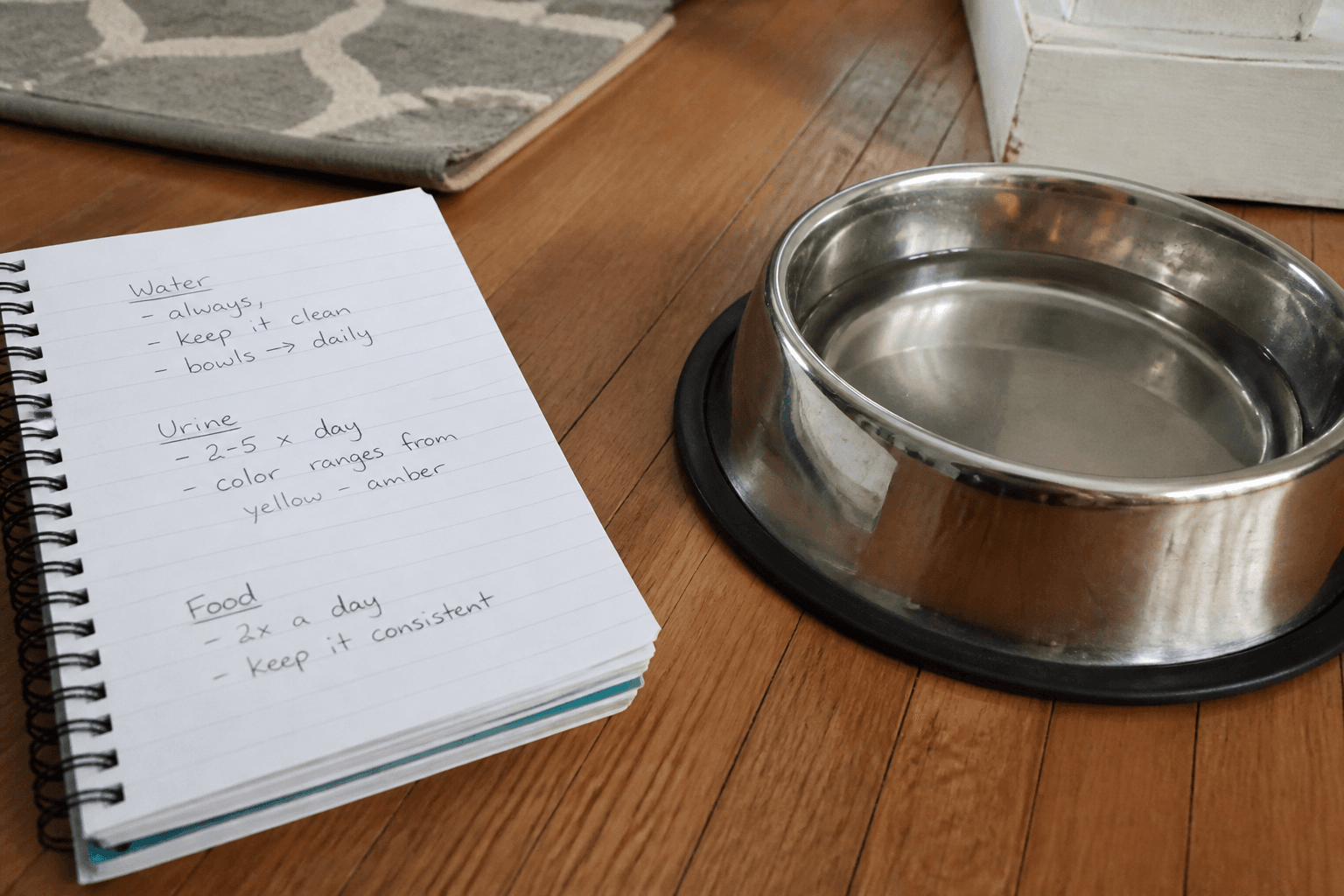
When the dog is stable and the clinic agrees that the appointment can be scheduled, prepare a short diary. Record times and numbers, not vague impressions:

  • amount of water added and remaining;
  • type and quantity of food;
  • frequency and general appearance of urine;
  • domestic accidents;
  • appetite, vomiting and feces;
  • recent weight, if measured reliably;
  • medicines and supplements;
  • unusual ambient temperature and activity.

Include videos of difficulty getting up, walking or positioning yourself to urinate. The article on signs that your dog may be in pain can help you notice discreet changes in posture and behavior, without replacing a clinical examination.

Do not postpone the appointment to complete the diary. If the signals are important or evolving, a few hours of recordings are enough. Bring information about previous illnesses, recent exams and dietary changes.

What to expect from the veterinary evaluation

The consultation begins with the history and physical examination. The veterinarian can evaluate hydration, mucous membranes, weight, body condition, heart, abdomen, skin and other systems. Depending on the findings, you may recommend blood, urine, blood pressure, imaging or specific tests.

A urine sample can be valuable, but don't collect it anyway without asking. Container, time, storage and technique all interfere. In some situations, the team prefers to obtain the sample at the clinic using a method that reduces contamination or allows specific analysis.

Results must be interpreted together. A value outside the range does not alone explain thirst, just as a normal isolated exam does not eliminate all cases. The plan may include repetition, comparison with previous results, and monitoring response to treatment.

What not to do while waiting

Do not restrict water to avoid accidents. Place more pots in accessible places if the elderly person has difficulty moving around. Choose stable containers and non-slip flooring. Clean and refill frequently, without non-prescription flavorings or additives.

Do not give human medicines, diuretics, kidney supplements, or teas. Do not switch to a “renal”, “diabetic” or homemade diet based on suspicion. Therapeutic diets have specific indications and may be inappropriate before diagnosis.

Do not force large amounts of water with a syringe. There is a risk of aspiration and thirst is not corrected in this way. If your dog is unable to drink, appears dehydrated, or is very weak, he needs care.

Also do not increase long rides as a solution to accidents. Offer more frequent and shorter departures, compatible with mobility. Diapers and mats can temporarily protect the environment, but require changing and hygiene to avoid irritation; do not resolve the cause.

Caderno com registro de água, urina e alimentação ao lado do pote do cão
Image credit: Acervo pessoal: DogWise

Adapt the home without normalizing the symptom

While investigating, provide easy access. A pot near the rest area helps dogs with osteoarthritis or reduced vision. At night, soft lighting and a clear path reduce falls. If you use stairs, consider barriers or other organization so that the dog can safely reach water and elimination sites.

These adaptations do not mean accepting excessive thirst as “an age thing”. They preserve well-being until diagnosis. Aging can change habits, but new symptoms deserve evaluation, especially when they are progressive.

Talk to all residents so that no one takes away the pot or offers salty food. Define who registers replacements and who monitors departures. A simple system produces better data than several people acting without coordination.

After diagnosis, continue measuring with purpose

If your veterinarian institutes treatment, ask what needs to change, how soon, and what signs require return. Some conditions require monitoring of water, urine, weight and tests. Others make daily measurement unnecessary once they are stabilized.

Do not adjust doses according to the pot on your own. A hot day or a different meal can change consumption. Use the trend and communicate changes according to the established plan.

Improvement does not always mean an immediate return to previous consumption. The objective, frequency of reassessment, and expected limits depend on the cause. Keep objective records and ask specific questions.

Frequently asked questions

How much water is too much for an elderly dog?

There is no single household number that diagnoses all dogs. Weight, diet, heat, activity and health all influence. Measure consumption without restricting and ask your veterinarian to interpret the amount in the individual context.

Can I remove the water overnight?

Don't do this on your own. If your dog is producing more urine due to a medical condition, limiting water may cause dehydration or worsening. Offer nighttime exit and secure the environment until guidance is obtained.

Does dry food make the dog drink more?

It can increase the water obtained by the pot compared to a higher moisture diet. However, marked or persistent thirst, especially with more urination or other symptoms, should not be automatically attributed to the feed.

Is drinking more water normal in the heat?

Consumption may increase on hot days, but the dog must have shade, ventilation and free water. Severe panting, weakness, vomiting, disorientation or suspected overheating require urgent care.

Should I take a urine sample to the appointment?

Ask the clinic first. If the sample is useful, the team will explain container, collection, storage and timing. In certain cases, the veterinarian will prefer to collect it during the appointment.

Conclusion

Increased thirst in an elderly dog is a sign to be measured, not suppressed. Confirm the change, keep water accessible, observe urine and associated symptoms, and organize a short diary. This data helps the veterinarian distinguish environmental changes from conditions that require investigation.

Seek brief evaluation if the change persists and urgent care in case of repeated vomiting, severe weakness, difficulty urinating, blood, pain or rapid worsening. Adapting the house reduces accidents and effort, but it does not replace finding out why the dog started drinking more.