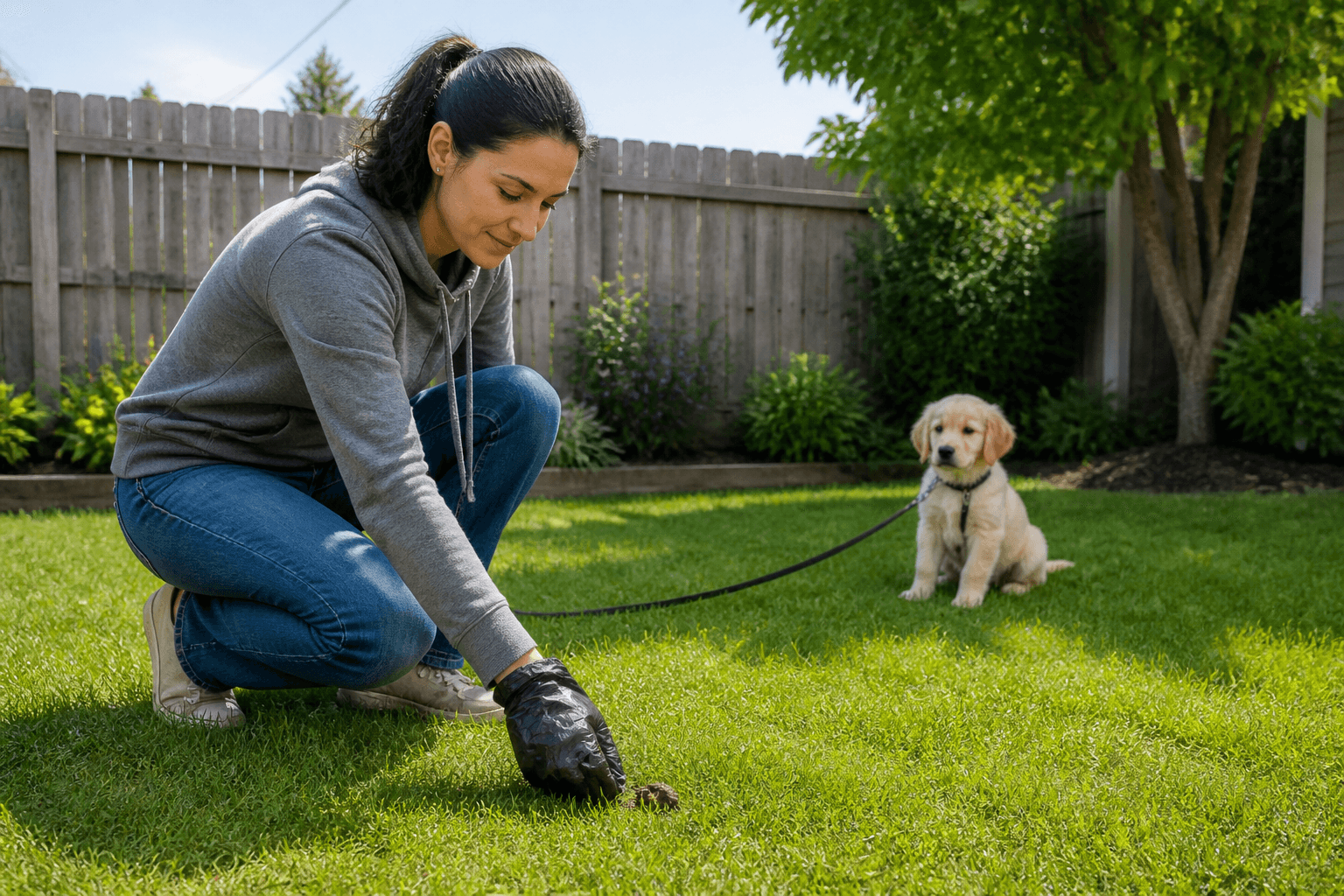
Tutor recolhendo fezes do quintal enquanto o filhote aguarda à distância

Image credit: Acervo pessoal: DogWise

Puppies8 min readPublished on August 17, 2026

Puppy eats feces (coprophagia): what to do without punishing

When a puppy eats feces, the most effective response is not to scream, chase or rub its nose at the area. Punishment can make him swallow faster to avoid human approach, hide elimination or become insecure around his owner. The first objective is to prevent access with supervision and immediate collection; the second is to teach a rewarding outlet.

Coprophagia can occur due to exploration, opportunity, habit, competition, inadequate routine or health reasons. It is not possible to choose the cause just by looking at an occurrence. Record the context, review food and deworming with your veterinarian and seek evaluation when the behavior is frequent, starts suddenly or is accompanied by diarrhea, vomiting, weight loss, excessive hunger or general changes.
Stop rehearsing the behavior

Each time the puppy reaches the feces, he practices a quick sequence: sniff, pick up, and swallow. Prevention reduces these repetitions while the workout is still being built. Follow your trips to the yard with a light guide and a comfortable distance, without pulling. As soon as he finishes evacuating, invite him to move away and reward away from the area while someone else collects, when possible.

In an apartment, have bags and cleaning materials ready before leaving. In a home with multiple dogs, collect immediately and arrange separate disposals if there is a dispute. Cat litter boxes should be inaccessible to the kitten, but still comfortable for the cats.

Do not leave feces in the environment to “test” whether the training worked. Initial success depends on setting up situations in which the correct answer is easy.

Punishment creates problems that look like stubbornness

A puppy does not understand a late scolding as a moral explanation. If the owner runs when he approaches the feces, the scene can turn into a game of chase or a sign that he needs to swallow before the object is removed. If you are punished when evacuating, you may start looking for hidden places.

Avoid forcibly opening the mouth, scaring with noise, using irritating substances or holding it close to feces. In addition to the impact on the bond, these actions do not teach what to do in the next moment. Management and reinforcement of removal are clearer.

Teach two different skills

“Leave” means not to take something that is still available. “Exchange” means to release something that is already in your mouth. Train both with safe, non-valuable objects, away from feces. For “leave it,” cover an item with your hand and reward when the puppy moves away. To “exchange”, offer better food, collect the object without dispute and, when safe, return it.

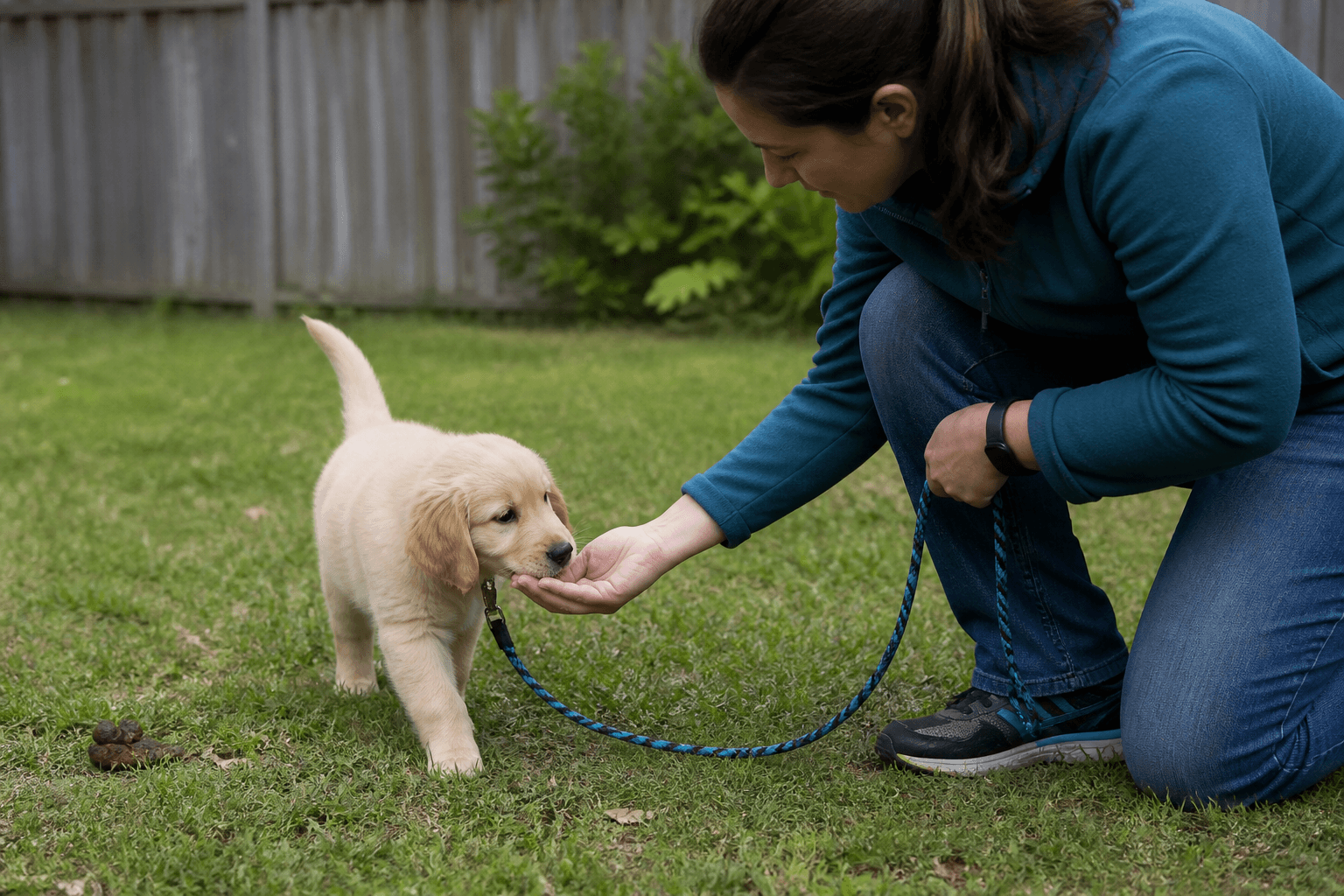
Do not test with hazardous material before creep exists. During elimination, use a familiar cheerful invitation, move a few steps away and hand out several small pieces as you collect. The reward needs to happen away from the feces to create movement in the desired direction.

Investigate routine and diet

Confirm with your veterinarian that the quantity, frequency and type of food meet the growth phase. Do not increase on your own or use supplements in an attempt to change the taste of your stool. Growth requires nutritional balance, and improvised changes can cause problems.

Observe eating speed, access of other animals to the pot, intervals and quality of feces. Severe hunger, weight loss, persistent diarrhea or a large change in appetite are relevant clinical information. Bring a history and, if requested, a correctly packaged stool sample.

Maintain parasite control according to professional guidance. Coprophagia does not confirm verminosis, and administering deworming repeatedly without a veterinary regimen does not resolve all causes.

Filhote recebendo petisco após se afastar das fezes com guia frouxa
Image credit: Acervo pessoal: DogWise

Reduce boredom without creating excess activity

Puppies need age-appropriate sleep, exploration, and short interactions. An overly tired animal also loses self-control. Space out sniffing activities, safe food toys, supervised chewing, and short drills throughout the day.

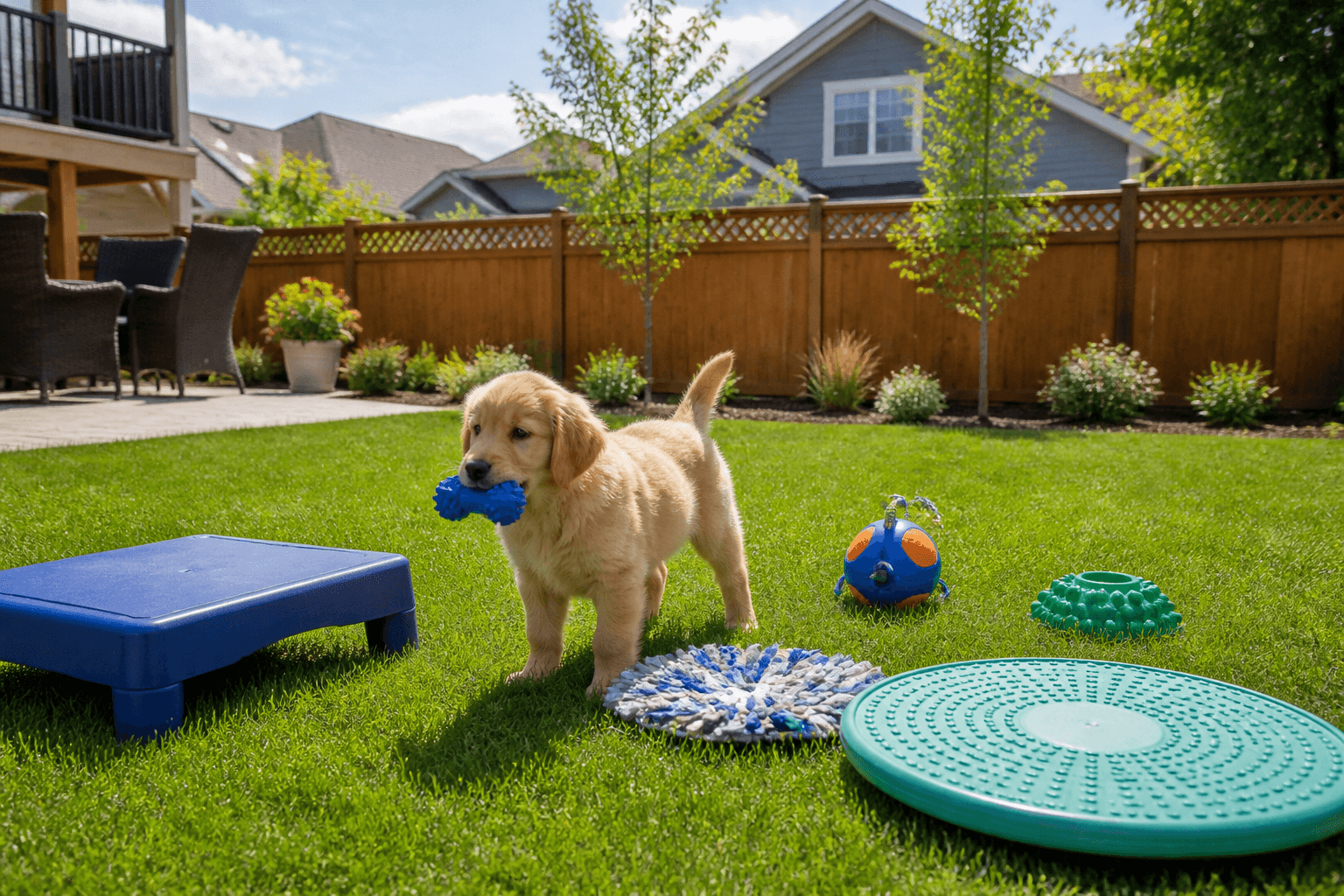
Choose toys large enough not to be swallowed and remove damaged parts. Enrichment does not replace collecting feces. It only expands opportunities for appropriate behavior.

Predictable bathroom routines help the owner stay present. Take the puppy to the location after waking up, eating, playing and at intervals compatible with its age, as per professional guidance. Reward elimination and then invite to another activity.

Hygiene protects the family and the animal

Feces can carry infectious agents. Collect with a barrier, dispose of correctly and wash your hands. Do not allow the puppy to lick faces immediately after ingesting feces; sanitize contaminated items according to veterinary guidance. Children must stay out of the area during collection.

The portal Healthy Pets, Healthy People from the US Centers for Disease Control and Prevention brings together guidelines for coexistence and hygiene with animals. Local recommendations from the veterinarian remain important, as risks vary depending on the region, species involved and the health of the people in the household.

Do not use dangerous cleaning products on the floor where your puppy walks. Follow labels, keep it away during application and rinse when indicated.

Feces from other animals change the scene

Cat feces, wild animals or unknown dogs involve different risks. Block access to contaminated boxes, gardens and public areas. On the street, use a guide and increase the distance before the puppy reaches the material.

If he has ingested feces of unknown origin and is showing symptoms, contact your veterinarian. Do not offer extra human medicine, antibiotics or dewormers. Provide probable origin, time and estimated quantity.

Coordinate training with health education

The puppy needs to feel safe to eliminate in human presence. Stay neutral while he searches the spot, reward right after he's done and call him away. Only then collect. If you approach too quickly, he may interrupt or hide.

Accidents inside the home must be cleaned up without scolding. Increase supervision and frequency of opportunities. If the difficulty involves confinement, the article about puppy that cries in the carrier helps to build adaptation without using the crate as a punishment.

A practical protocol for each output

Before opening the door, place a guide, separate rewards and leave bags accessible. Go to the elimination point without messing around. When the puppy is finished, say the away signal once and move back. Reward as he follows along.

Collect without allowing immediate return to the point and then release to sniff or play in another area. This sequence turns walking away into a gateway to good things. With repetition, gradually reduce the amount of food, keeping rewards varied.

If he ignores the call, don't repeat it ten times. Approach the leash without jerking, increase the distance from the stool and make the next test easier.

Quintal limpo com brinquedos de enriquecimento apropriados para filhote
Image credit: Acervo pessoal: DogWise

Monitoring notebook

Write down whose feces it was, where it was, and whether the puppy had just eaten, slept or played. Differentiating your own feces from those of other animals better guides management.

Record stool consistency and changes in appetite, weight, and energy. Don't try to diagnose from notes; take the set to the veterinarian to support the evaluation.

Count how many times the attack was prevented and how many times the puppy responded to removal. The most important data is not just intake, but the creation of successful alternatives.

Observe the reaction to human approach. Running away, freezing, quickly swallowing, or protecting the material indicates that disputes may be brewing. Stop confrontations and seek guidance without coercion.

Review collection times and those responsible for collection. A rule that only works when a person is at home leaves loopholes. Distribute tasks and keep materials in places accessible to adults.

Evaluate weekly, without provoking tests. Fewer opportunities, faster response to invitation and more consistent stools are useful information. An isolated relapse calls for review of the environment, not punishment.

Include seemingly small changes in the record, such as visits, changed food, a new animal in the house or changes in schedules. These details may explain why supervision failed or why the puppy spent more time searching for objects. Adjust one variable at a time whenever possible to distinguish real improvement from a simple change in opportunity.

When to seek professional help

Schedule a veterinary evaluation if coprophagia is persistent, intense, sudden or associated with digestive signs, abnormal hunger, weight loss, medication use or general change. Seek faster care if you experience apathy, repeated vomiting, blood, dehydration or ingestion of a toxic substance in the feces.

A trainer who uses positive reinforcement can help with recall, cueing, switching, and resource guarding prevention. It must work together with veterinary research, not promise a solution based solely on food additives.

Frequently asked questions

Will the puppy stop alone?

Some reduce the behavior, but waiting while they practice can consolidate the habit and maintain health risks. Start management and talk to your veterinarian.

Does pineapple or another food change the flavor?

Homemade recipes do not solve all causes and can unbalance the diet or cause discomfort. Do not add foods or supplements without guidance.

Should I use a muzzle in the yard?

Muzzles do not replace collection and training. If a professional indicates temporarily, she needs to allow panting and drinking, be adapted gradually and never be left unsupervised.

Does eating feces mean a lack of nutrients?

Not necessarily. There are several behavioral and medical possibilities. Only assessment of diet, health and context can guide this hypothesis.

How to clean your mouth afterwards?

Do not use human paste, rinse or irritating products. Prevent face licking, offer water and ask your veterinarian for appropriate advice if there is concern.

Conclusion

To deal with coprophagia, remove the opportunity before demanding self-control: supervise, move the puppy away after bowel movement and collect immediately. Practice “leaving” and switching in easy situations, provide an appropriate routine, and maintain consistent hygiene. Punishment tends to accelerate the intake or hide the behavior. When there is a high frequency or other signs, veterinary investigation is an essential part of the plan.