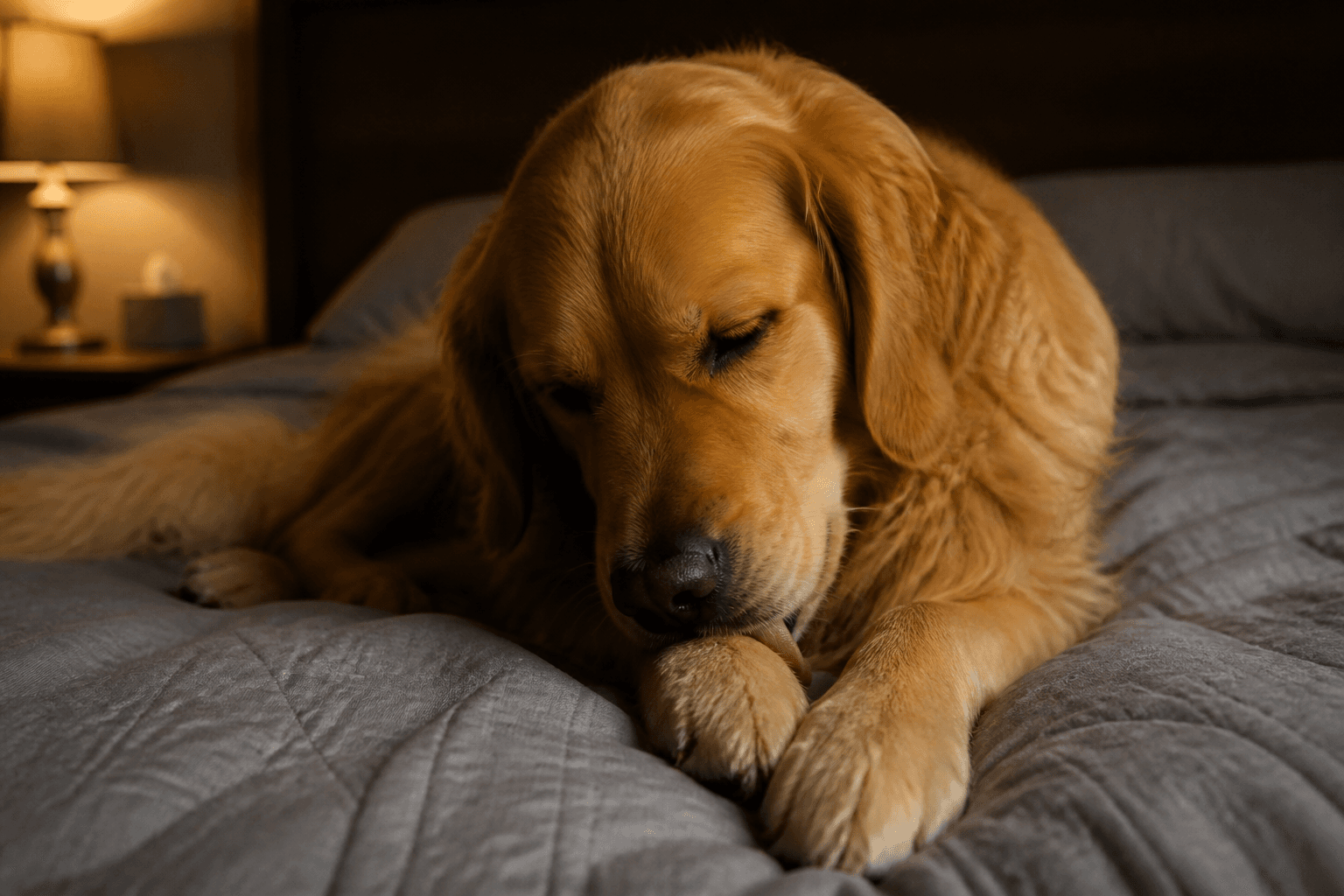
Cão deitado à noite lambendo suavemente uma das patas dianteiras

Image credit: Acervo pessoal: DogWise

Health10 min readPublished on August 17, 2026

My dog ​​licks his paws at night: what could this indicate?

You turn off the light, the house becomes silent and that repetitive licking sound begins. While it is easy to conclude that the dog has developed a “craze,” licking his paws at night does not point to a single cause. It may just be a brief cleaning after the ride, but it may also accompany itching, pain, wetness between the toes, contact irritation, anxiety or lack of adequate activity.

The most useful detail is not just if he licks, but how, when and how much. A short, injury-free session that ends spontaneously is different from an insistent lick, concentrated on one paw, capable of interrupting sleep or leaving the fur damp. Observing this pattern helps the veterinarian and avoids homemade attempts that mask the problem.

This content is educational and does not replace veterinary consultation. Persistent changes in the paws deserve professional evaluation, especially when there is pain, wounds, swelling or changes in behavior.

First: differentiate normal care from a sign of discomfort

Dogs may lick their paws as part of hygiene. After walking on wet ground, sand or dirt, some remove small residues with their tongue. It is also common for there to be an occasional lick before settling down. In these cases, the skin remains normal in appearance, the dog accepts the paw being touched and the activity does not dominate the routine.

The behavior deserves more attention when:

  • happens almost every night or increases progressively;
  • lasts several minutes and starts again immediately after an interruption;
  • leaves one or more paws constantly wet;
  • occurs mainly in a single paw;
  • is accompanied by biting, pulling on the fur or rubbing the paw on the ground;
  • there is redness, odor, secretion, crusts, hair loss or darkened skin;
  • the dog limps, avoids supporting the limb or resists touch;
  • changes appear in the ears, belly or other areas of the skin.

A short video, made without attracting the animal's attention, records the duration and intensity better than the memory the next day. Also write down the time, the trip taken, the surface it passed through, different foods and products used in the house.

Why the problem seems worse at night

Nighttime is not always the cause. Often, it just makes the behavior more visible. During the day there is movement, noise, food, walks and interaction. When the stimuli subside, a mild itch or mild pain may receive the dog's full attention. The tutor also perceives sound better in a silent environment.

Another common scenario is licking after the last ride. Damp grass, hot floors, sand, cleaning products in common areas and small particles between your fingers can irritate. If the dog comes into the house, lies down and starts licking immediately, it is worth examining the relationship with the journey, without assuming that all external contact causes allergies.

There are also dogs that use repetitive behaviors to calm themselves. Licking can occur after a day that is not predictable, with excessive excitement or little opportunity to sniff and rest. However, classifying the case as “anxiety” before excluding physical discomfort is risky. Pain and itching also alter sleep and make the dog restless.

Possible physical causes

Contact irritation and dryness

The skin on the paws comes into direct contact with the environment. Cleaning products, rough surfaces, heat, cold, salt, mud and vegetation can irritate it. The problem can affect several legs, especially areas that have touched the ground. Repeatedly washing with soap or applying scented substances tends to worsen dryness.

After the ride, a simple inspection is often most helpful: observe pads, spaces between toes and nail contours in good light. If there is only dirt, water at a comfortable temperature and careful drying may be enough. Do not use alcohol, hydrogen peroxide, essential oils or human ointments without veterinary advice.

Foreign body, nail or small injury

When only one paw receives intense attention, look for signs of a thorn, splinter, fragment, broken nail, cut or burn. Do not insert forceps deeply or force your fingers apart if there is pain. A loose, superficial object is different from something that has penetrated the skin. Attempts to withdraw can break it, push it, or cause defensive biting.

Also observe if the dog starts to avoid a certain floor, climb stairs more slowly or change the way he sits. These details connect to other signs that your dog may be in pain.

Itching and inflammation of the skin

Itching can have different origins, including environmental or food hypersensitivities, parasites and secondary inflammation. By appearance, the owner can rarely distinguish the cause. Redness between the fingers, odor and secretion may accompany the proliferation of microorganisms, but this requires diagnosis; does not mean that any red paw needs antibiotics or antifungals.

Licking keeps the area moist and can increase irritation, creating a cycle: it bothers, the dog licks, the skin barrier suffers more and the discomfort increases. Physically stopping the licking may temporarily protect the area, but will not resolve the source.

Pain that doesn't start in the skin

The dog may also lick near a painful joint or in response to discomfort in the limb. In older animals, discrete changes in mobility deserve attention. At any age, trauma, unusual exertion, or compensatory posturing enter the investigation. The paw may appear normal from the outside, which is why a negative home inspection does not end the case.
Tutor examinando com cuidado os espaços entre os dedos do cão
Image credit: Acervo pessoal: DogWise

What to observe at home without causing more irritation

Carry out the assessment when the dog is calm. Choose a bright place and stop if he shows fear or pain. Compare the four paws: temperature, volume, color, smell and sensitivity. Gently pull the hair aside and look between the toes, around the nails and on the pads.

A practical itinerary includes:

  1. Record which paws he licks and for how long.
  2. Check if the licking starts after a walk, meal, cleaning the house or time alone.
  3. Photograph the same area once a day, with similar lighting, if there is a visible change.
  4. Observe support, walking, disposition, appetite and sleep.
  5. Write down products and medicines already used, even those considered “natural”.

Avoid examining every few minutes. Excessive handling also bothers and increases the dog's attention to the area. The goal is to gather reliable information, not to perform a home diagnosis.

Secure measures while you organize the assessment

If the paws are dirty after the walk, rinse only when necessary and dry completely, including between the toes. A clean, soft towel helps; Hot dryer can burn or dry out. Maintain nails and hair according to the routine recommended by the professional who accompanies the dog, without cutting them too close during a crisis.

Reduce access to freshly washed floors until they dry and check the product manufacturer's dilution and instructions. If a route repeatedly coincides with the problem, temporarily choose another route and record the result. This comparison is more informative than changing food, shampoo and walking at the same time.

Offer a calm nighttime routine, with opportunities to eliminate, sniff and then rest. Appropriate stuffed toys can help bored dogs, as long as they do not replace physical investigation and are used safely. If the dog abandons high-value food to continue licking, this data suggests relevant discomfort.

The American Veterinary Medical Association brings together care guidelines for owners, but no general page replaces an individual examination of the animal.

What tends to fail — and why

Change food immediately

The association between paw and “food allergy” is common, but a random exchange confuses the assessment and can unbalance the diet. When the veterinarian considers a food reaction, the investigation requires a defined strategy, ingredient control and adequate timing. Snacks, leftovers and palatable medicines also count. Changing brands for a few days does not confirm or exclude a cause.

Apply human ointment

Creams may contain ingredients that are unsuitable for ingestion, as the dog will lick the area. Some change the appearance of the lesion and make collection or diagnosis difficult. Even a veterinary product must match the correct problem.

Scolding or distracting all the time

Scolding can interrupt licking in the owner's presence without reducing itching, pain or anxiety. The dog may start licking in secret and associate human approach with conflict. A calm termination followed by vet-recommended protection is different from punishment.

Put on socks and forget

Socks retain moisture, are tight, slip and can be ingested. In specific situations, physical barriers are useful, but they need correct size, supervision and guidance. A protective collar also prevents access, but does not treat the cause and requires safe adaptation for eating, drinking and moving around.

Use “natural” recipes

Vinegar, bicarbonate, teas and essential oils can irritate or be toxic depending on the substance, concentration and ingestion. Natural does not mean safe. The inflamed paw has a weakened barrier and reacts differently than intact skin.

Comparação visual das patas de um cão sob iluminação clara
Image credit: Acervo pessoal: DogWise

When to seek veterinary care

Seek priority care if there is persistent bleeding, deep wound, object penetrated, torn nail, rapid swelling, discharge, severe pain, inability to support the paw or general worsening. Facial reaction, difficulty breathing, weakness or collapse are signs of urgency.

Make an appointment when licking is repeated, causes injury, alters sleep or does not improve with the removal of obvious and mild irritation. It is also worth anticipating the evaluation of puppies, elderly people and dogs with previous illnesses. Take videos, photos and notes; inform all products used.

During the consultation, the professional may need to examine the skin, nails, gait and other areas. Depending on the history, additional tests may be indicated. Treatment varies greatly: removing a foreign body is not the same as controlling parasites, managing hypersensitivity, treating an injury, or addressing repetitive behavior.

Frequently asked questions

Can I wash paws every night?

Washing unnecessarily can dry out and irritate. When there is dirt, use water at a comfortable temperature and dry well. If your veterinarian prescribes a specific product and frequency, follow that guidance rather than improvising.

Does the reddish color in the fur prove that there is an infection?

No. Saliva can change the color of light hair, and persistent moisture signals frequent licking. Infection, inflammation and underlying cause depend on examination and sometimes testing.

If he only licks before bed, is it anxiety?

Not necessarily. Silence can make itching or pain more noticeable, and the time can coincide with the walk. Emotional aspects enter the assessment after observing the context and excluding relevant physical causes.

Can I stop it with a sock?

Not without supervision. It can retain moisture, tighten or be swallowed. Ask your veterinarian which barrier is suitable and for how long, especially if there is already a wound.

How long should I observe before booking an appointment?

There is no single deadline. Pain, swelling, discharge, wounds or difficulty supporting yourself require quick care. Without intense signs, but with recurrence for several nights or worsening, schedule an evaluation instead of prolonging home tests.

Conclusion

Licking paws at night is a behavior that needs context. Frequency, duration, number of paws affected, relationship to walking, and changes in skin or gait help separate brief grooming from a problem that warrants investigation.

Start with gentle inspection, recording the pattern, cleaning only when necessary, and removing obvious irritants. Do not change several elements of your routine or use medications on your own. If the licking persists, causes injury or comes with pain and swelling, take the observations to the veterinarian. The best answer is not to simply stop the tongue from reaching the paw, but to identify why that paw started to demand so much attention.